
Key Strategies for Google Ads Optimization To Maximize ROI
Optimizing your Google Ads campaigns can seem daunting, especially with the numerous options available for targeting, bidding, and ad types.
However, focusing on key metrics and leveraging best practices can significantly improve your campaign performance.
In this article, you’ll discover valuable insights and strategies that will help you get the most out of your Google Ads investment.
Keep in mind that Google Ad optimization is an ongoing process. As you gather data and learn more about your audience, your campaigns will continue to evolve and become more effective.
By dedicating time and effort to optimization, you will be able to yield better results and achieve your digital marketing goals.
There are various ways to optimize your Google Ads.
Budget Management
Managing your Google Ads budget is crucial for a successful campaign. Allocate your budget based on the performance of your campaigns and adjust it accordingly.
Monitor your spending daily to prevent overspending and optimize your campaigns' performance.
Here are some tips for effective budget management:
Set a daily budget: Determine how much you want to spend on a given campaign each day. Google Ads will evenly distribute your budget throughout the day.
Adjust budgets for high-performing campaigns: Increase the budget for campaigns with a higher return on investment (ROI) to capitalize on their success.
Use shared budgets: Share a budget across multiple campaigns to efficiently allocate resources based on performance.
Smart Bidding
Smart Bidding is an automated bidding strategy that utilizes machine learning to optimize your ads for conversions or conversion value.
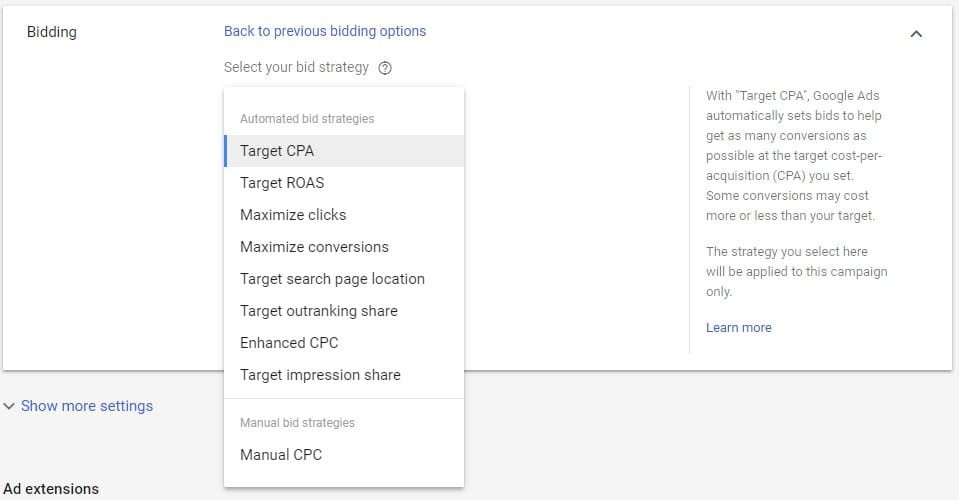
You can benefit from various bidding strategies like Maximize Clicks, Enhanced Cost Per Click (ECPC), and Target ROAS and Target CPA.
Leverage Smart Bidding to set the right strategies for your business and watch your campaigns perform better.
Target CPA (Cost Per Acquisition) is a Smart Bidding strategy that helps you acquire conversions at a set cost per conversion.
By setting the desired CPA, Google Ads will automatically adjust your bids to achieve that target.
Keep in mind that you might need enough conversion history to make the most out of this strategy. To set up Target CPA:
1. Go to your Google Ads account and click on "Campaigns".
2. Choose the campaign you want to apply Target CPA to and click on "Settings".
3. Under "Bidding", select "Change bid strategy" and choose "Target CPA".
Target ROAS (Return On Ads Spend) is another Smart Bidding strategy aiming for the best return on your ad spend.
This strategy optimizes the bids to achieve a certain percentage return on ad spend over time. It's particularly effective for ecommerce businesses with clear revenue goals.
To set up Target ROAS:
1. Go to your Google Ads account and click on "Campaigns".
2. Choose the campaign you want to apply Target ROAS to and click on "Settings".
3. Under "Bidding", select "Change bid strategy" and choose "Target ROAS".
Remember to monitor your campaigns regularly and make adjustments as needed, to make the most of your Google Ads budget and bidding strategies.
Keyword and Match Types
To optimize your Google Ads, it is crucial to conduct thorough keyword research.
Utilize tools like Google's Keyword Planner to identify relevant keywords for your business.
This will help you understand what your potential customers are searching for and enable you to target the right audience.
Broad match keywords allow your ads to appear for searches that include any word in your keyword, in any order.
This offers the widest reach but may result in irrelevant clicks. It is essential to regularly review and adjust your broad match keywords to maintain the efficiency of your ad campaign.
Example: If your keyword is "red shoes," your ad may appear for searches like "buy shoes red," "shoes for sale," or "red boots."
Phrase match keywords will trigger your ad only when the exact phrase, in the same order, appears in the search query.
This type of match offers more control over when your ad gets displayed but still allows for some variation.
Example: If your keyword is "red shoes," your ad may appear for searches like "buy red shoes," "red shoes for sale," but not "shoes red" or "red boots."
Exact match keywords offer the highest level of control. Your ad will only appear when the search query matches your keyword exactly, without any extra words or variations.
While this may result in fewer impressions, it ensures that your ad is highly relevant to the searcher's intent.
Example: If your keyword is "red shoes," your ad will appear only for searches like "red shoes" and not for any other variation such as "buy red shoes" or "red shoes for sale."
By effectively using these match types and conducting thorough keyword research, you can optimize your Google Ads to reach your target audience efficiently.
Remember to monitor and adjust your keywords and match types regularly to maintain the success of your ad campaign.
Creating Effective Ad Groups
When creating ad groups, it's important to maintain a focus on relevance. Your ad groups should consist of ads and keywords that are closely related to each other.
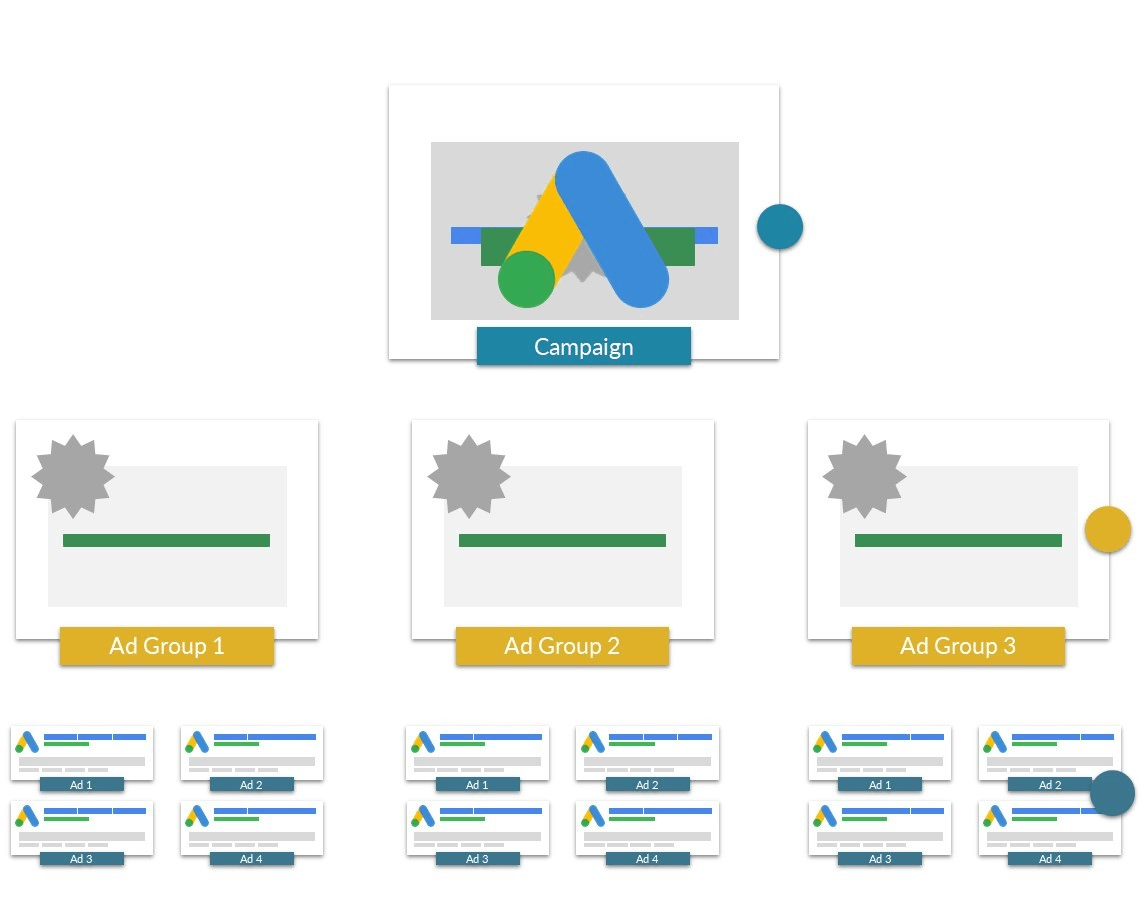
This approach ensures that your ads are targeted towards the right audience, resulting in better ad performance.
To set up an effective ad group, follow these steps:
Identify your target audience: Understand who your customers are and what their needs are.
Group-related keywords: Create a list of relevant keywords for each ad group based on your target audience's interests.
Limit the number of keywords: Keep the number of keywords per ad group small, ideally between 5-20 keywords. This will help maintain the focus and relevance of your ads.
Writing Engaging Ad Copy
The success of your Google Ads campaign depends on compelling ad copy. Your ad copy should clearly communicate your offer and persuade users to click on your ad.

Consider the following tips for writing engaging ad copy:
Highlight your unique selling proposition (USP): Clearly state what sets you apart from your competitors.
Use strong, action-oriented language: Encourage users to take the desired action, such as "Buy Now" or "Sign Up Today."
Include numbers and symbols: Adding numbers and symbols, like "%" or "$," can grab the attention of potential customers.
Experiment with different ad variations: Test multiple ad versions to see which one performs best.
By paying attention to the structure and content of your ad groups and ad copy, you can optimize your Google Ads campaign and achieve better results.
Remember that relevance is key in both ad groups and ad copy.
Utilize the ad strength indicator to evaluate the effectiveness of your ads and make necessary adjustments for improved performance.
Conversion Tracking
To optimize your Google Ads for conversions, start by setting up conversion tracking.
This enables you to gather data on how your ads are performing in relation to your targeted actions, such as sales, sign-ups, or phone calls.

With conversion tracking, you can analyze your campaign's effectiveness and make informed decisions to improve your return on ad spend (ROAS).
Step 1: Set up and install the conversion tracking code on your website or app.
Step 2: Define the specific actions or events you consider as conversions.
Step 3: Assign a monetary value to each conversion event to evaluate its impact on your business.
Keep an eye on your conversion rate, as it helps you understand the percentage of people taking the desired action after clicking on your ad.
Cost-per-conversion
When optimizing your Google Ads for conversions, it’s crucial to focus on cost-per-conversion or cost-per-action (CPA).
This metric represents the average amount you spend to acquire a single conversion.
Strive to lower your CPA while maintaining the quality of conversions to achieve a more effective advertising campaign.
A/B Testing
Conducting A/B testing can greatly enhance your Google Ads optimization. By regularly testing different ad variations, you can identify the most effective ones.
To perform A/B testing, create two or more versions of your ad with slight variations in elements such as headlines, descriptions, or images.
Compare the performance data of these ads, such as click-through rates (CTR) and conversions, to establish the most effective version.
Remember to test one element at a time, keeping everything else constant, to isolate the impact of each change.
Search Terms Report
To further optimize your ads, analyze the Search Terms Report in your Google Ads account.
This report helps you understand which search queries triggered your ads and can provide valuable insights for refining your keyword list. You can use this data to:
Identify relevant search terms to add as new keywords
Discover irrelevant terms to add as negative keywords
Optimize bids for specific keywords based on performance
Regularly reviewing and updating your keyword list according to the Search Terms Report will ensure that your ads appear for the most relevant and high-performing searches.
Remember to continually track and analyze your ad performance, using A/B testing and the Search Terms Report to optimize your Google Ads campaigns.
By implementing these strategies, you can improve your ad performance and achieve better results over time.
Ad Extensions
Ad extensions offer you the opportunity to enhance your ads with additional information, increasing their relevance and encouraging click-through.
They help improve user experience and make your ads stand out from the competition.
To optimize ad extensions, follow these guidelines:
Choose appropriate extensions that best match your advertising goals and target audience.
Regularly review and update extensions, ensuring the information is accurate and up-to-date.
Track performance and make adjustments based on the data, focusing on what works best for your campaigns.
Landing Page Optimization
Your landing page plays a crucial role in converting visitors into customers.
A well-designed and optimized landing page ensures that users find the information they need and are encouraged to take action.
To make the most of your landing pages, consider the following:
Relevance: Ensure the landing page content is relevant to the ads driving traffic to it. Your ad and landing page should work together to create a cohesive user experience.
Clarity: Keep your landing page clean and easy to navigate, allowing users to quickly find what they're looking for.
Call-to-Action: Include a clear and compelling call-to-action, encouraging visitors to take the next step, whether it's making a purchase, signing up for a newsletter, or contacting you for more information.
Optimizing your landing pages is an ongoing process.
Monitor your performance metrics, and make data-driven adjustments to improve user experience and conversion rates.
By leveraging ad extensions and focusing on landing page optimization, you can enhance your Google Ads performance and get the most out of your advertising efforts.
Conclusion
To sum up, optimizing your Google Ads campaigns is essential for driving better ROI and achieving your business goals.
By implementing the strategies outlined in this post, including budget management, smart bidding, effective keyword targeting, engaging ad copy, conversion tracking, and leveraging extensions and landing pages, you can create highly effective campaigns that deliver results.
Remember to regularly monitor your campaign performance and make adjustments as needed to ensure that your ads are reaching the right audience and driving conversions.
With the right approach to Google Ads optimization, you can achieve success and grow your business online.
And if you need more help understanding how it works, then click the link below to learn more about Google Ads so you can start growing your business.
SHARE


Subscribe now
Sign up for our newsletter to get the most interesting stories of the day straight to your inbox before everyone else
Privacy policy • Terms of service • | © 2025, ACT Marketing, LLC